Rules and requirements
What the system must do, for whom, and what it has to prove.
- Requirements and gap analysis
- Workflow mapping with the people involved
- Build-or-buy options
ux · data · automation · build
I translate complex systems into tools people understand at a glance, on mobile, desktop or web, and on the channels they already use. Clear rules and sound data underneath, routine work automated, and plain words and simple screens on top.
Start small: a 3-minute systems check or a fixed-scope Requirements & Gap Analysis.
Systems tend to break where people meet them: rules nobody wrote down, data that can’t answer a simple question, screens people work around. I design the rules, the data, the automation and the screens together, so the complexity stays out of people’s way.
What the system must do, for whom, and what it has to prove.
The structure underneath: what gets recorded, how it connects, and what can be reported.
The routine work handled by the system, with people kept on the decisions.
Journeys that fit how customers, staff and partners work, on the devices they already use.
Say what happened and what’s next.
Quote status: QT_APPROVED_L2Your quote is approved
Email or chat for customers, an app for people in the field, a console for the office. One record behind them all.
At a desk, in the field or on the move, online or off, tested with the people who use it.
Every screen says what happens next and who does it.
A working concept and three products I designed, built and run. Client work under NDA can be discussed on a call.
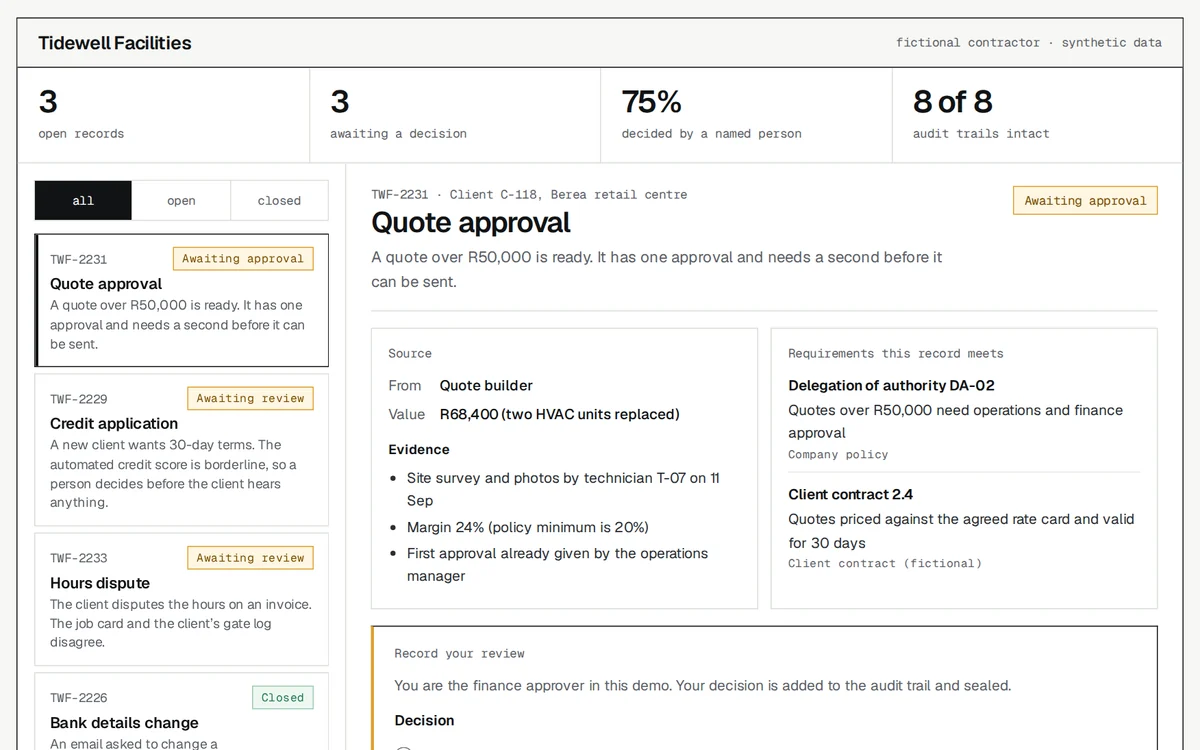
A fictional maintenance contractor growing from one city to three: job cards captured offline, quote approvals, credit terms, subcontractor compliance and SLA reports, with every decision recorded. Make a decision, then try to tamper with the record.
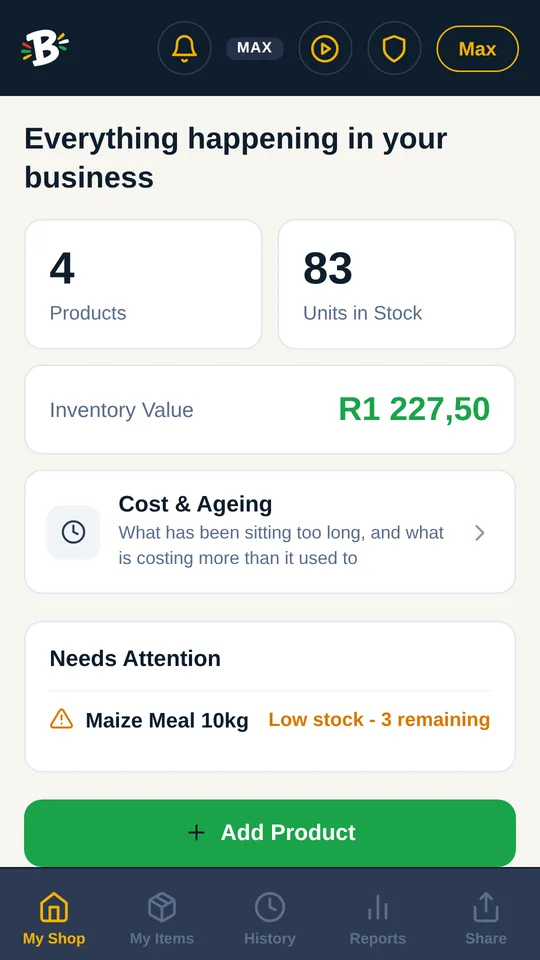
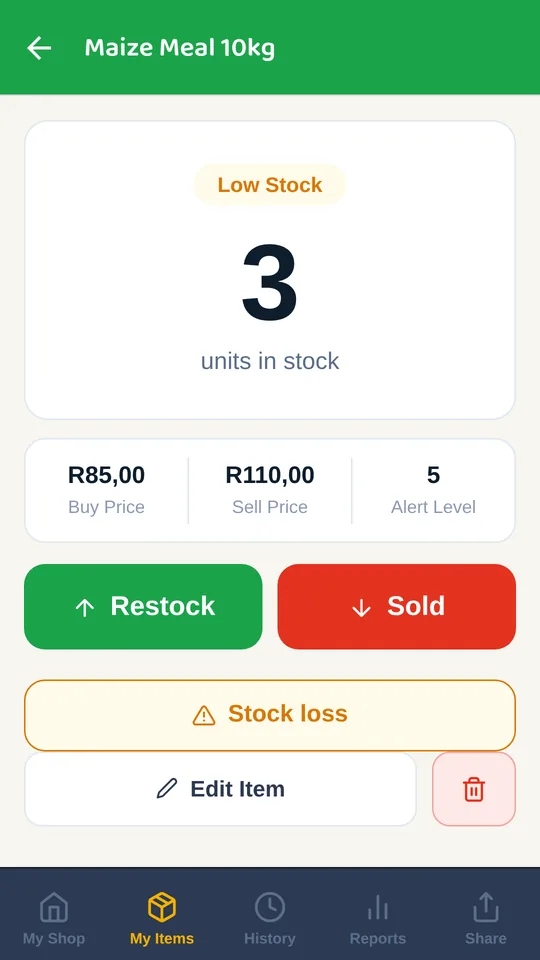
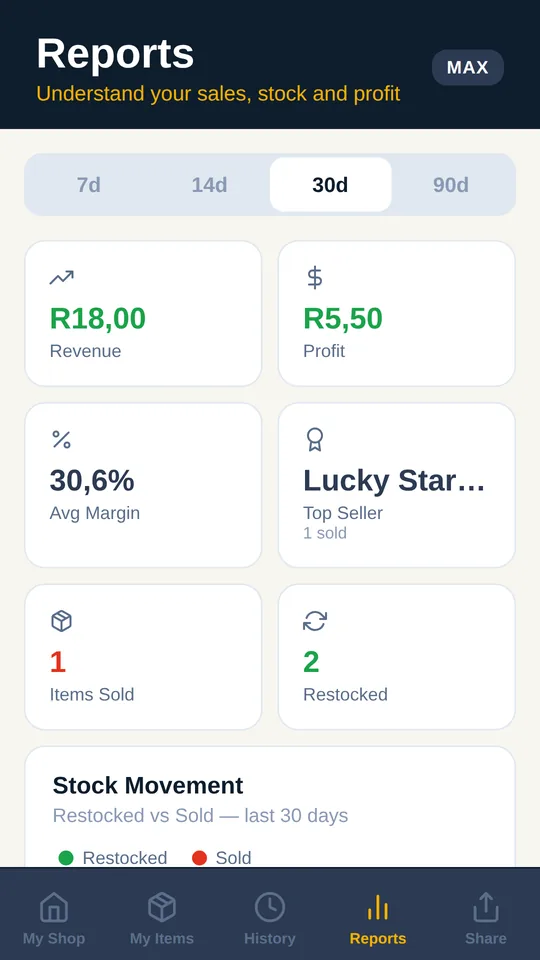
Offline-first stock and sales for spaza shops and micro businesses. Encrypted on the phone, no account needed, reports that work without signal. Designed and built end to end.
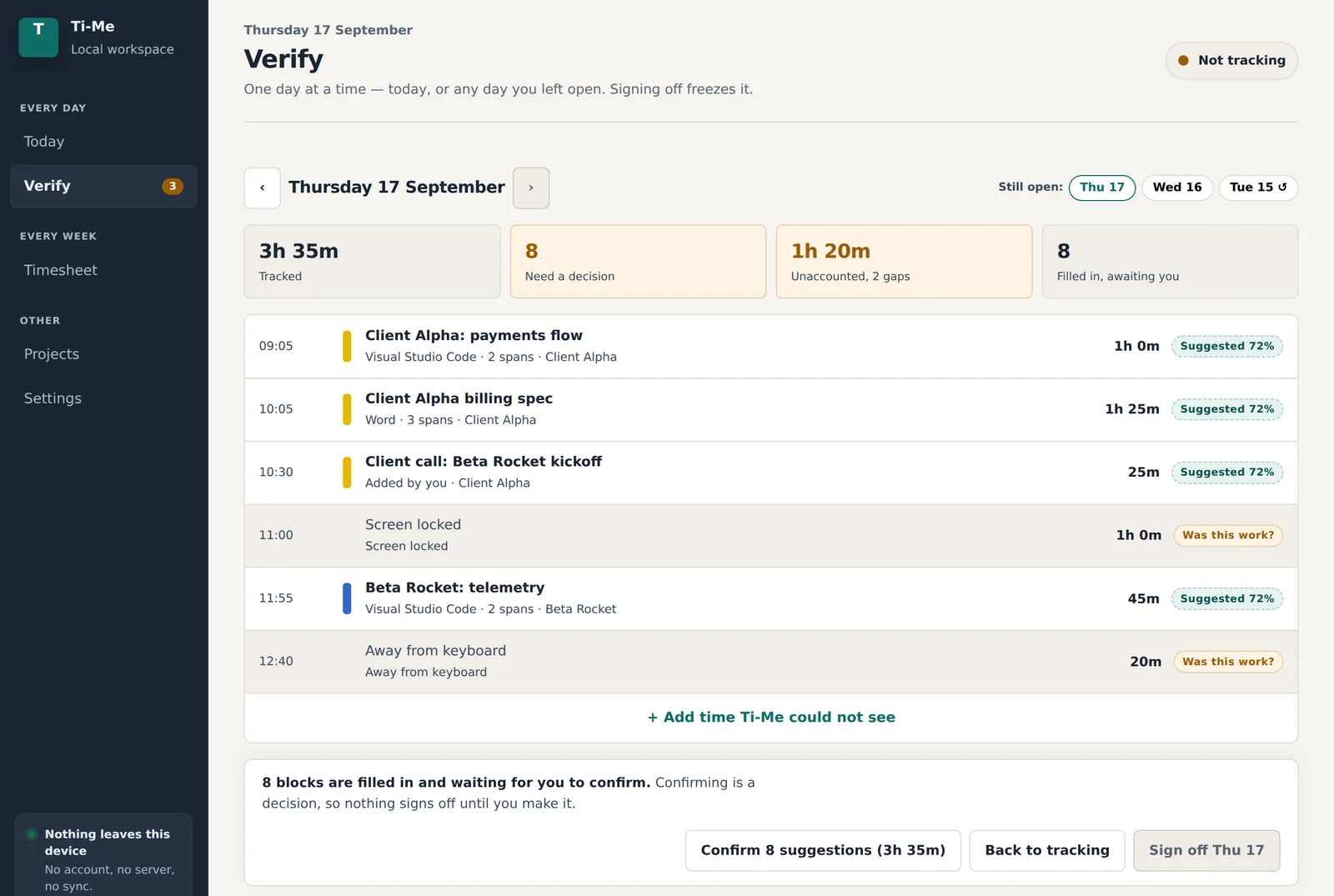
A private time tracker for contractors. It records quietly, suggests projects without deciding, and builds timesheets only from days you sign off. Nothing leaves the computer. Designed and built end to end.
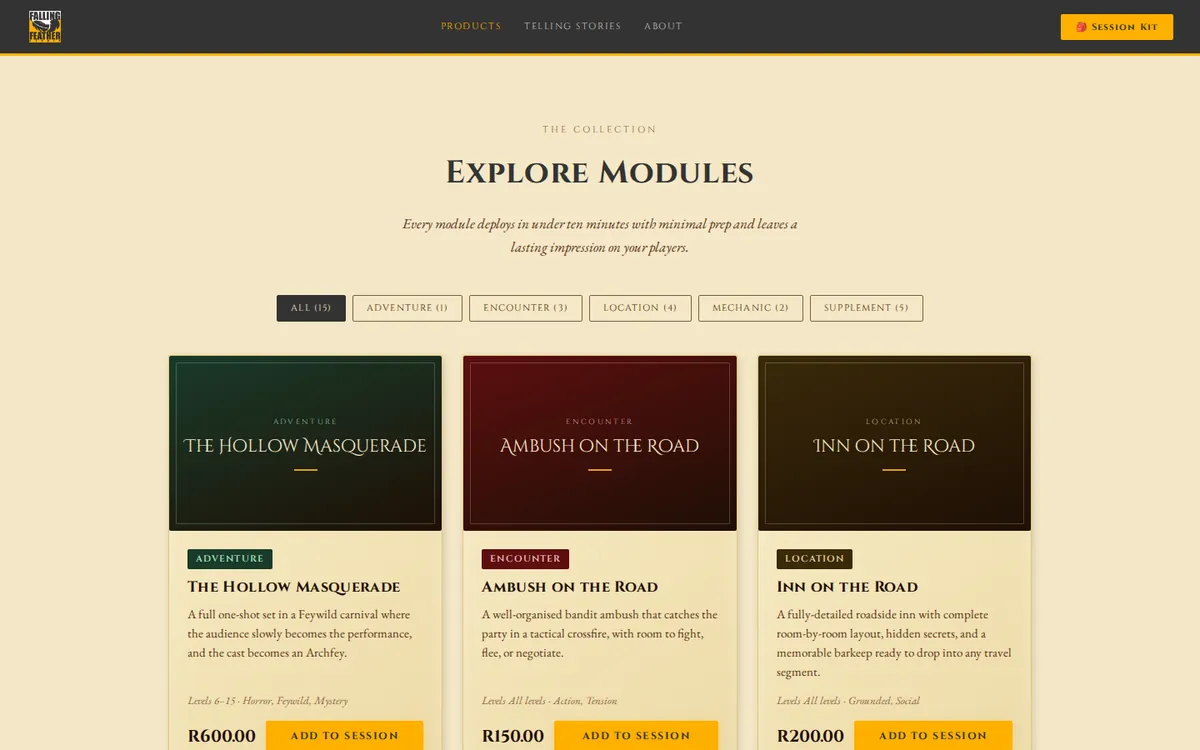
My own digital product business: tabletop roleplaying supplements with rand checkout, secure download delivery, and the brand and operations behind it.
Also in development: TrustTrade, a trust-first services marketplace for South Africa.
Each step ends with something you keep, whoever does the next one.
Fixed scope. Interviews, workflow mapping and two workshops.
you get: requirements, gaps, build-or-buy options, a scoped proposal. Details
Data schema, workflows and interfaces, prototyped and tested with the people who will use them.
you get: schema, prototype, build specs
With your developers or a partner team, or by me for smaller products. I stay on as product lead.
you get: a working, tested system
Monthly design and data work as the programme or product changes.
you get: ongoing releases
Not sure where you stand?Take the 3-minute systems checkEvery step is quoted in writing before it starts.
When orders, invoices, approvals or reports run on spreadsheets, email and copy-paste, and the team spends its week keeping them in step.
Whether the money comes from corporate ESD, government or donors, the system has to run the programme and prove what it achieved.
When a new product, partnership or integration needs requirements and data work your team doesn’t have time for.
For 17 years I designed live, regulated products in iGaming: platforms that ran around the clock, served many kinds of user, and changed with every market’s rules.
Now I bring that discipline to South African businesses and the organisations that support them. My job is to keep the complexity out of the way of the people using the system, and to automate the work nobody should be doing by hand. I build for small businesses myself. BalaShoppa started with a simple question: why do the businesses with the least access to tools and credit fail the most often?
I translate complex systems into tools people find easy to understand and use. I get the business rules and the data right underneath, then design workflows and screens that meet people where they are: in plain language, on the devices they already have and the channels they already use, email and chat included. I work with businesses that want to automate routine work, with small business programmes, and with fintechs whose customers are small businesses.
With a fixed-scope Requirements & Gap Analysis. I work out what the system needs to do, where the current setup falls short and what to build first, and you get a scoped proposal for the project. See how projects start.
Yes. For smaller products I build end to end, as I did with BalaShoppa on mobile and Ti-Me on desktop. For larger systems I work with your developers or a partner team and stay on as product lead, so what gets built matches the design.
Yes. I map how the work runs today, automate the routine steps (data entry, reminders, approval routing, document intake, reports and syncing between tools) and keep people on the decisions that need judgement. Where AI helps, a person reviews what it produces.
Yes. The data schema is part of every design: what gets recorded, how records connect, and which reports and integrations it has to support. You get it as a document your developers can build from. The demo shows an example.
They come out of the design rather than being added later. When each workflow is designed on purpose, it leaves a clear record: the figures funders ask for, and the evidence auditors and regulators expect. I work alongside your legal and compliance advisers; I don’t give legal advice.
Every engagement starts with a free discovery call. You get a written scope and quote before any work begins.
Julian Stanley, founder and principal designer, based in Durban, KwaZulu-Natal. I can work either remotely or embedded in a team for the duration of a contract.
Thirty minutes on your programme or product, your users and your timeline. You leave with a clear next step, whether or not we work together.
Email julian@stanleydesign.co.za
LinkedIn julian-g-stanley